

What is a CSA?
CSA stands for community-supported agriculture. You buy a share of a farm's harvest before the season starts, and each week you pick up a box of what that farm actually grew. The farm gets its money up front, when it needs it most. You get produce that was in the ground days ago instead of on a truck for a week.
You're buying a share of a harvest. That shared outcome is the whole idea, and it's what the word "supported" is doing in the name.
USDA Certified Organic · Year-round harvest · Pickup at the farm
1986
The year the term was coined in America
1960s
When the model was already running, in Japan and Alabama
52 weeks
Our harvest runs every week of the year
$40
Lowest weekly price, on a 10-Week Harvest
Where it came from
Invented more than once, by people who never met.
01
The idea traveled
In Japan in the 1960s, a group of women worried about pesticides and the loss of nearby farms built teikei, a direct arrangement between growers and households. The word is usually translated as partnership, and the movement's own phrase for it was food with the farmer's face on it. In Europe, farms working from Rudolf Steiner's biodynamic ideas built comparable producer-consumer alliances through the 1960s and 1970s, including Les Jardins de Cocagne in Switzerland in 1978.
02
America had its own version first, and mostly forgot it
Booker T. Whatley, a Black horticulturist and professor at Tuskegee University, developed the Clientele Membership Club in the 1960s and 1970s. Members paid up front and harvested through the season. Whatley designed it to solve a specific problem: small farmers needed capital before planting and couldn't get it from a bank. He listed it among his commandments for profitable small farming. It's the CSA model, built in Alabama, decades before the term existed.
03
The name arrived in 1986
Two farms opened that year using the term community-supported agriculture: Indian Line Farm in South Egremont, Massachusetts, and Temple-Wilton Community Farm in Temple, New Hampshire. They're usually credited with starting the CSA in America. What they started was the phrase. Rodale is explicit that they hadn't heard of teikei at the time.
Sources: Rodale Institute, The History of Community Supported Agriculture. FoodPrint, The Untold History of CSA.
What it's for
Four things a CSA does that a grocery run can't.
The farm gets paid before the season
Seeds, soil, and labor all come before the first harvest. A CSA is how a farm funds that stretch without borrowing against it.
The risk is shared, and so is the good year
You're a member of a harvest, not a customer of a warehouse. When a crop does well, the box shows it.
You eat what the season gives
The box decides, not you. Most members say this is the part that changed how they cook.
You know where it came from
You can stand in the place your food grew and meet the person who grew it.
What you're committing to
A deal in two directions.
What you commit to
- A length of time, paid up front.
- Whatever is in the box that week.
- Picking it up on your day, at the farm.
What the farm commits to
- A box every week for the full term.
- Growing against the shares it sold.
- Telling you what's coming.
| Harvest | 4-Week Harvest | 10-Week Harvest |
|---|---|---|
| Price | $180 | $400 |
| Per week | $45 | $40 |
| Term | 4 weeks | 10 weeks |
The longer the commitment, the lower the weekly price.
Two questions people always have, answered here instead of buried: you can skip a week when you travel, and we add it to the end of your harvest. Both harvests are a single up-front purchase that runs to the end of its term.
Prices are the same at every farm and include the box every week of your term.
How Area 2 Farms runs one
A city farm, and no off season.
There's no off season
A traditional CSA runs a summer season, then goes quiet. Our farms grow indoors, so February has a harvest. You can join in any month and eat from the farm that week.
The farm is in the neighborhood
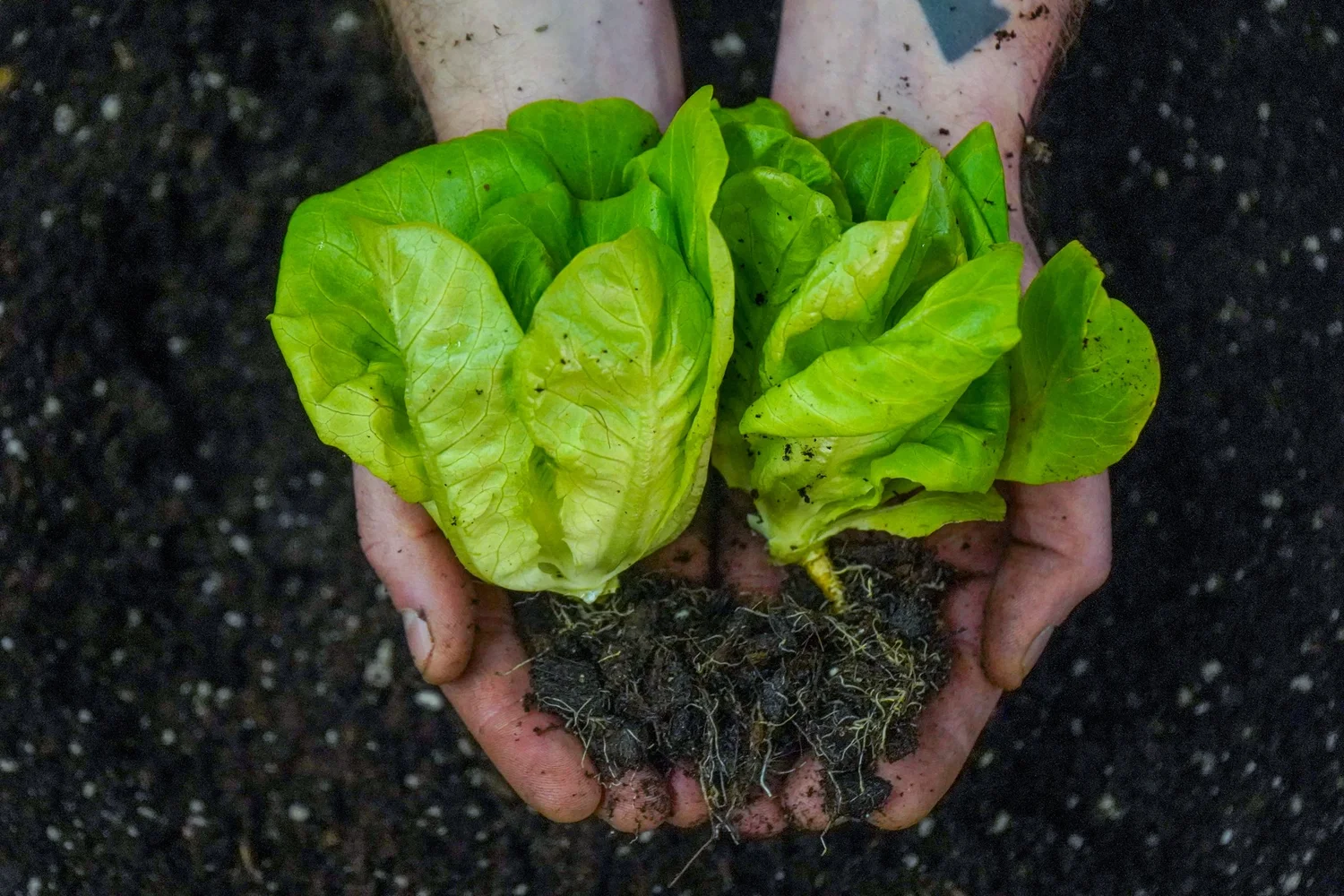
Not a drive out into the county. You can walk into the building your food grew in, and it's picked the morning you get it. We're USDA Certified Organic.
What's in the box
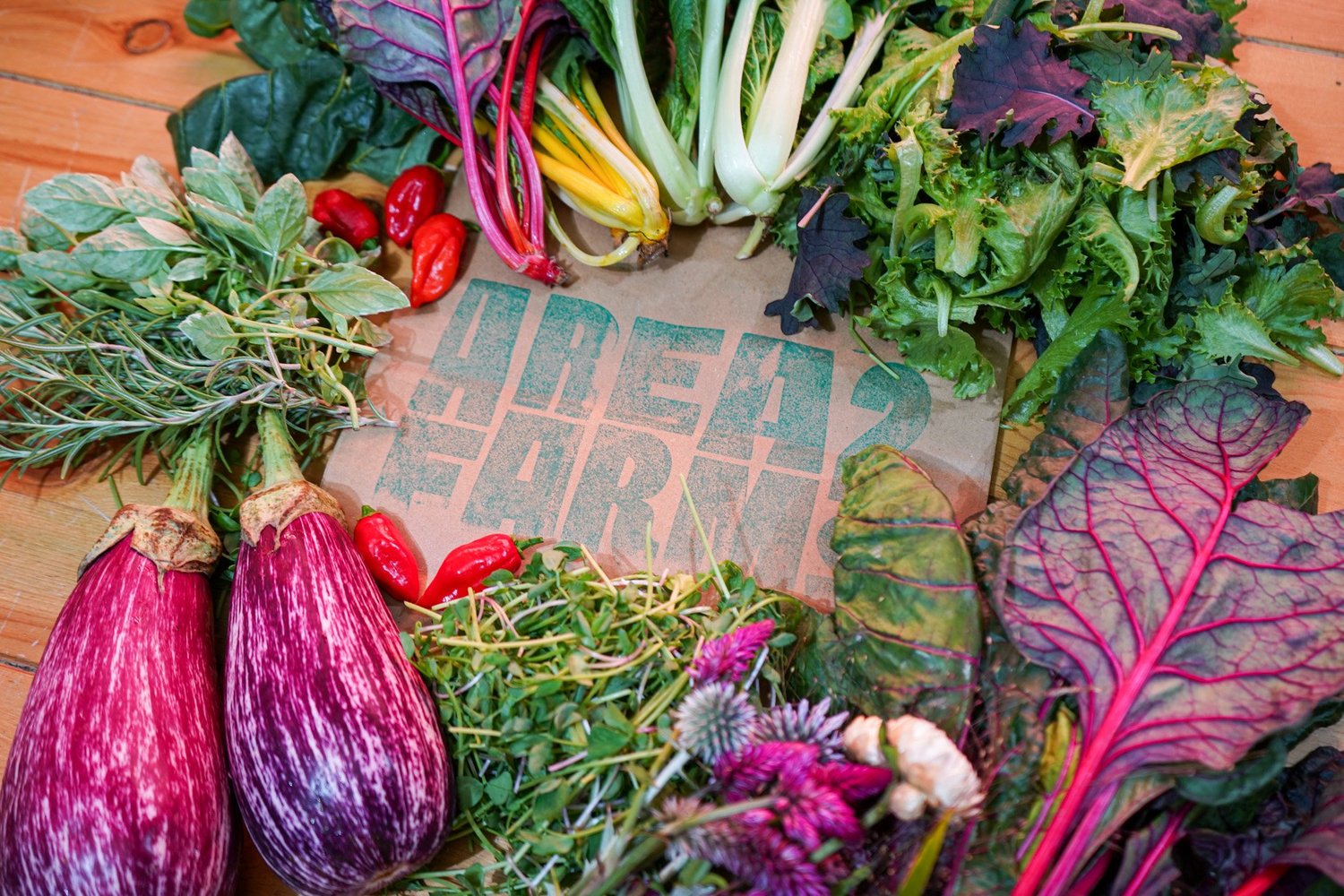
- Greens like bok choy and kale.
- Microgreens and shoots like cabbage microgreens and pea shoots.
- Herbs like rosemary and mint.
- Root vegetables like turnips and potatoes.
- Specialty items like herb oils, herb salts, and tea blends.
The box changes every week, and you don't choose what's in it. That's the deal a CSA makes with you. See the Almanac for what's growing right now.
Find your farm
Three farms, one harvest.
Same harvest lengths, same prices, pickup at the farm.
Questions
Frequently asked questions
What if I go away for a week?
Skip the week from your account and we add it to the end of your harvest. Nothing is lost.
Do I choose what's in the box?
No. You get what the farm harvested that week, which changes with the planting plan.
What happens in the winter?
Our farms grow indoors, so February has a harvest like every other month.
Where and when do I pick up?
At your farm, on the same day each week, during posted pickup hours. Your farm's page lists the day and the address.
How much food is in a share?
A week's box suits one or two people who cook most nights. Households of four often take two shares.
Can I give a share as a gift?
Yes. Buy any harvest length as a gift and we send the recipient their pickup details.
How is a CSA different from a produce delivery box?
A delivery box sells you groceries it sources from wherever. A CSA sells you a share of one farm's harvest, so the box reflects what that farm grew.
What happens at the end of my term?
Your harvest ends and nothing renews on its own. Join again whenever you like.