

Purple Shamrock
You usually see purple shamrock as a houseplant or in an ornamental garden, but it’s an entirely edible plant, and it’s delicious.

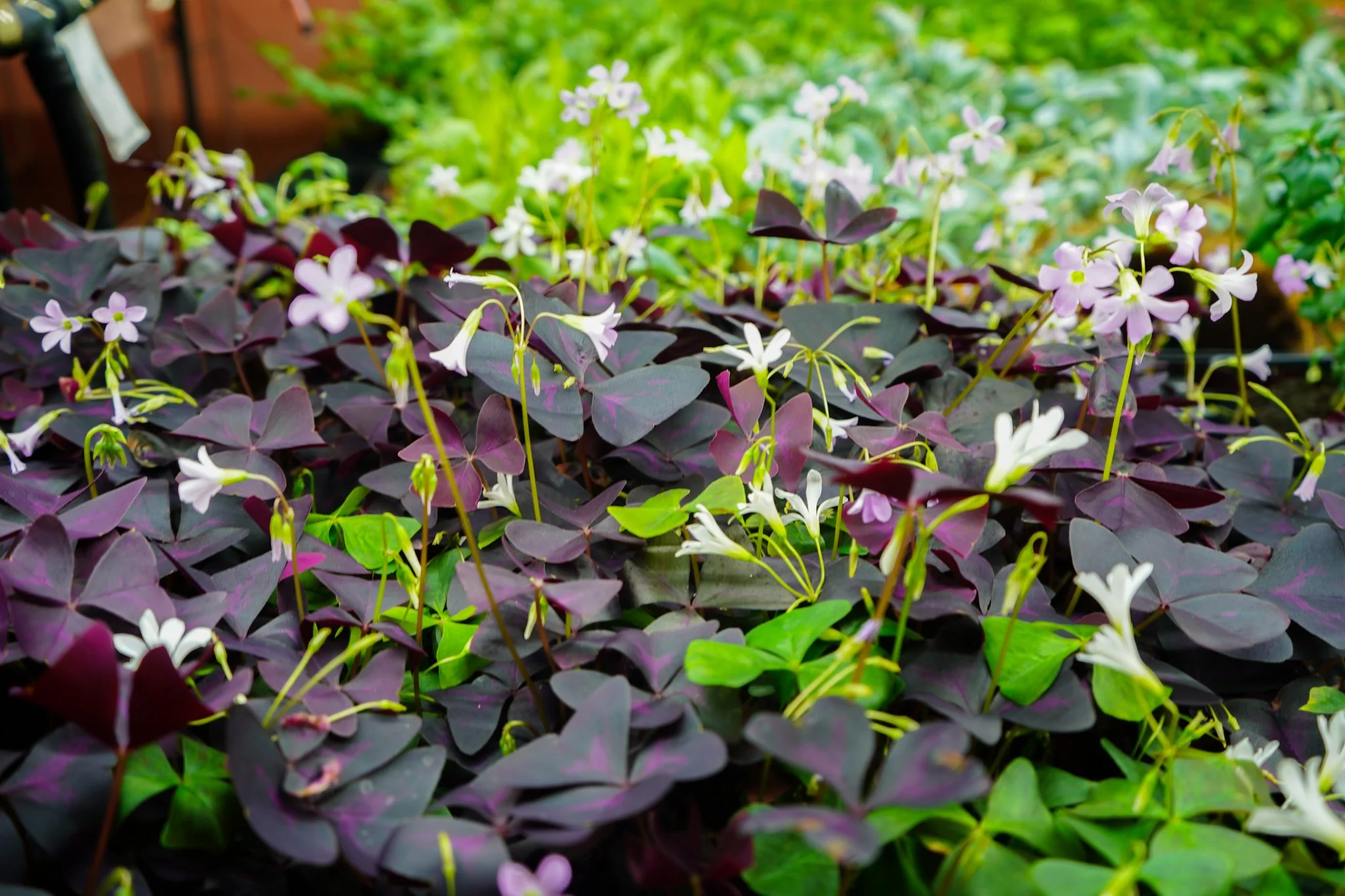
What is Purple Shamrock?
Purple shamrock is native to South America and part of the oxalis family, which includes wood sorrels and clover-leaved plants of all kinds. It’s a rhizomatic, herbaceous perennial, meaning it grows from an underground stem that sends up new shoots and roots. That stem stores starches and proteins, helping the plant survive through winter and push out fresh leaves and flowers in the spring.
The plant grows distinctive triangular leaves in a deep purple color. They naturally close at night or on cloudy days, then open back up with the morning light. It also produces small clusters of white and pink flowers.
Both the leaves and stems are edible, raw or cooked, with a bright, citrusy flavor. That tang comes from oxalic acid (also found in vegetables like spinach and broccoli), along with a boost of vitamin C.
You’ll see purple shamrock used in ornamental gardens. but because those are frequently treated with chemicals or pesticides, it’s best not to forage it outdoors. At Area 2 Farms, we grow USDA certified organic purple shamrock that you can trust.
Wash & Store
When ready to use, gently rinse under cold water and pat dry.
Store in the fridge wrapped in a paper towel or in a sealed container.
How to Use Purple Shamrock

Purple shamrock is best eaten raw, as cooking dulls both its bright citrus flavor and deep purple color. Use the whole plant, including the leaves and stems.
Salads & grain bowls: Toss in whole leaves and stems for a fresh, tangy bite and a pop of color. And think about using rich ingredients like roasted squash, sweet potatoes, beets, or pistachios.
Vinaigrettes: Finely chop purple shamrock and stir into dressings.
Herb butter or cheese: Blend purple shamrock leaves into softened butter or soft cheese along with other herbs like parsley or chives.
Lemonade: Mix leaves with lemon juice, sugar, and water for a refreshing drink.
Garnish: Scatter over tart desserts or use in cocktails.
Farmer favorite: Add to vanilla ice cream and finish with a drizzle of good olive oil.
Purple Shamrock Recipes
Purple Shamrock Health Benefits
Because of its high oxalic content, excessive consumption of purple shamrock can inhibit calcium absorption; but consuming it in moderation can have benefits. It does contain vitamins and minerals like vitamin C, K and various B vitamins, as well as fiber. These nutrients play important roles in supporting the immune system, bone health, and energy metabolism.
Purple Shamrock Facts
Purple shamrock is also referred to as false shamrock, love plant, and purple wood sorrel.
Gardening and caring for plants like purple shamrock can have positive effects on mental health and well-being. Engaging in activities like gardening may help reduce stress and improve your mood.
