

Turnips
Hearty, tasty, and healthy, turnips are one of the earliest domesticated vegetables. They have some genius survival techniques, work well in a variety of dishes, and have many health benefits.

What are Turnips?
A turnip is a root vegetable and a member of the mustard family along with arugula, radish, and kale. When turnips grow, they produce long, broad green leaves and develop a tuberous root that stores sugars and nutrients to ensure the plant's survival. If left alone, a turnip plant will not flower and go to seed in its first year—its root system will spend the summer enlarging with sugars and nutrients, so much that it can withstand the winter and sprout new greens when the spring comes.
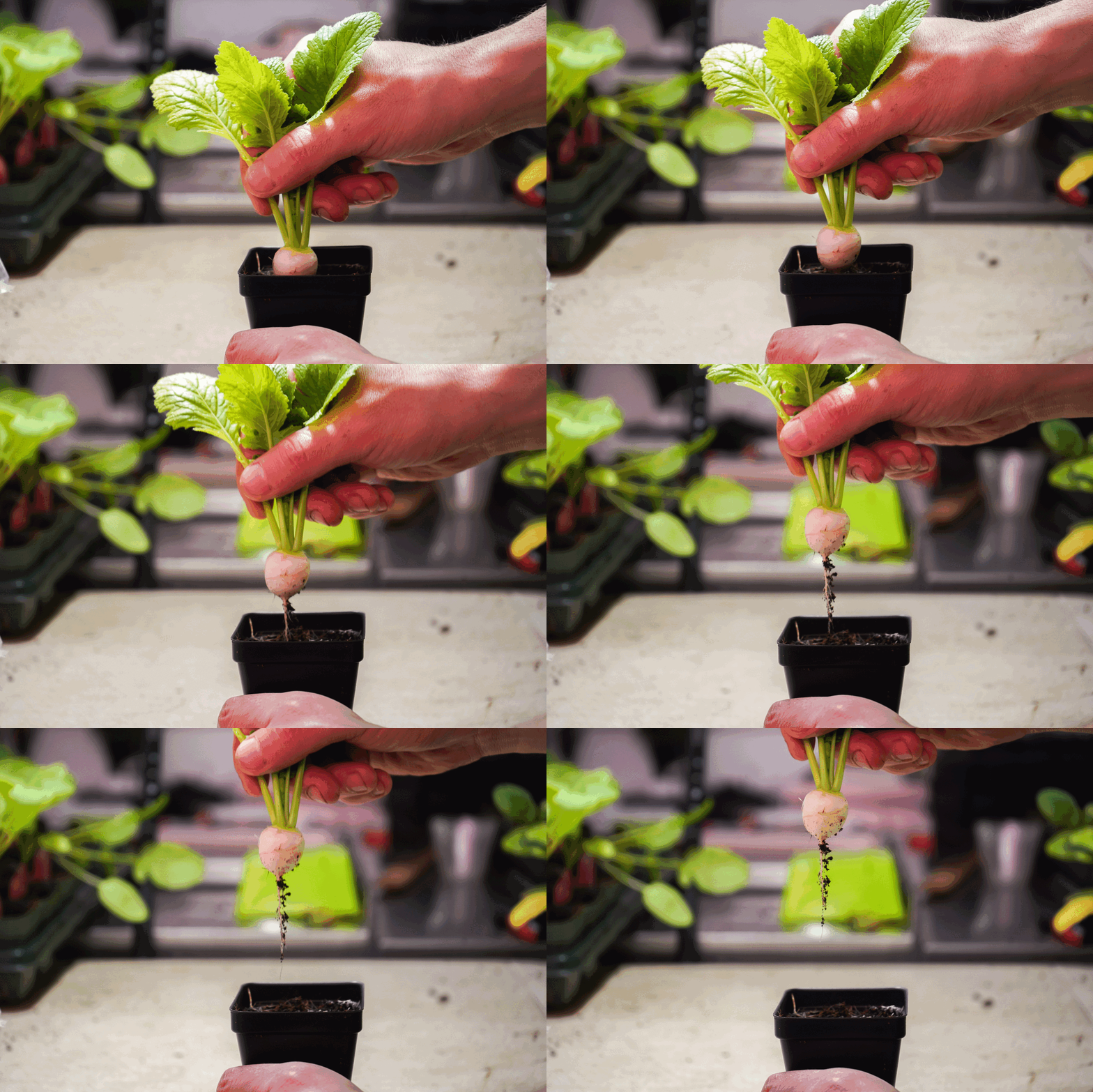
Turnip roots are usually round in shape, with varying sizes (the current Guinness record was 63.9 lbs. in 2020). They have a white, green, red, or purple skin with white flesh. There are several varieties of turnips. At Area 2 Farms, we grow Harukei turnips. We harvest them when they are the size of a golf ball; they are round, bright white with bright green leaves, and have a mild, sweet flavor compared to traditional turnips.
Turnips’ bitter, pungent flavor is due to their glucosinolates - sulfur compounds that are released when the cell wall of the plant is damaged by chewing, for example. The bitterness is meant to be a defense, deterring animals from eating the plant and microbes from infecting it.
Many humans happen to love this flavor, which is a good thing as these compounds have been found to inhibit cancerous cell growth or even kill cancer cells. Turnip extracts are being studied for anti cancer and other beneficial properties—antioxidant, anti inflammatory, and antimicrobial.
Wash & Store
To store Hakurei turnips, rinse and dry, wrap them in a damp paper towel, and store them in your crisper drawer.
How to Use Turnips

Both the turnip root and its leaves are delicious and can be prepared together or separately. The organic Hakurei turnips that we grow have a crisp, juicy texture and sweet, slightly nutty flavor. They are great raw in a salad or shredded into a coleslaw.
Here are more ways to prepare turnips:
Roasted turnip roots: Toss turnip wedges with olive oil, salt, pepper, and any fresh herbs or spices (such as rosemary or thyme), then roast them in the oven at 400°F until they're tender.
Turnip Greens: Sauté turnip greens with olive oil, salt, pepper, and garlic.
Turnip Recipes
Turnip Health Benefits
Turnips are low in calories while rich in nutrients; the roots are a great source of vitamin C; and the greens of vitamin K. Turnips also provide a good dose of fiber; all of these vitamins and minerals lead to many health benefits:
Hydration and Detoxification: Turnips have a high water content, which helps keep the body hydrated and supports kidney function by promoting urine production and waste elimination.
Antioxidant: Turnips contain compounds like glucosinolates, which have antioxidant properties. Antioxidants help protect the body from oxidative stress and damage caused by free radicals, which contribute to chronic diseases like cancer and heart disease.
Bone Health: Turnips are a good source of calcium and vitamin K, both of which are important for bone health. Calcium helps strengthen bones and teeth, while vitamin K contributes to bone mineralization, which prevents osteoporosis.
Turnip Facts
The name Hakurei means "white ray of light" in Japanese, referring to the turnip's bright white color.
Turnips, not pumpkins, were used to carve the first Jack-o’-lanterns.
Throughout history, turnips were not always appreciated. In Ancient Rome, turnips, not tomatoes, were thrown at disliked public figures. In the 15th century, “turnip eater” was used as an insult. Charles Dickens would use “turnip” to mean “idiot’ in his work.
Area 2 Farms for Locals
Your food should be equally accessible and nutritious. Which is where we come in. At Area 2 Farms, we grow fresh organic produce within 10 miles of you.
